It’s easy for worship leaders to drift into thinking their primary responsibility is creating powerful moments. Moving bridges, perfect transitions, and spontaneous choruses that gives everyone goosebumps can become the main focus. But worship ministry is not primarily about emotional atmosphere. It is about spiritual formation.
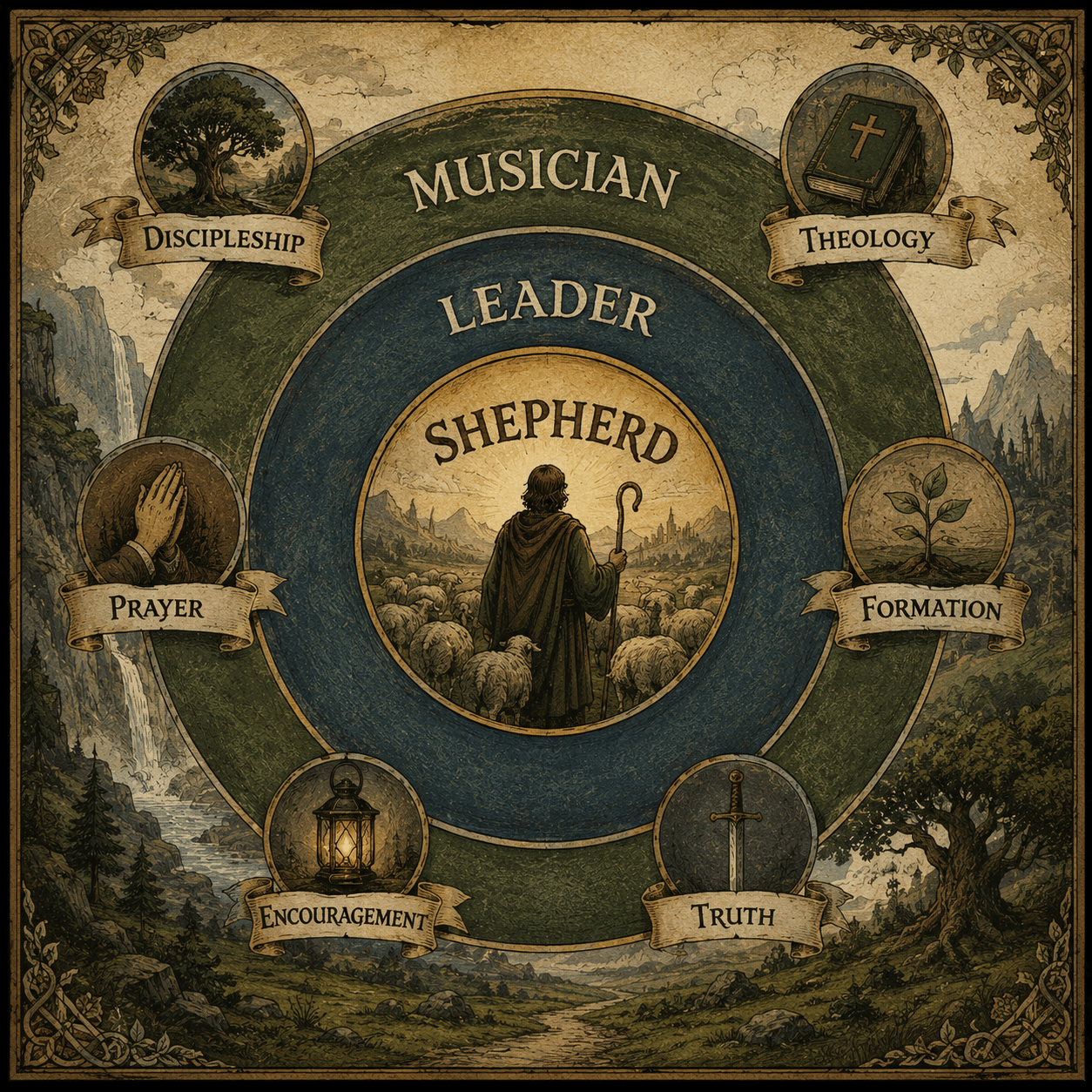
Worship leaders are not just musicians with microphones. They are shepherds helping shape how people think about God, respond to truth, and engage with His presence week after week. Whether they realize it or not, worship leaders are discipling their congregations every Sunday. That means worship leaders must learn to think like pastors, not just performers or creative directors.
Worship Shapes Theology
Many people in the church sing theology before they can explain theology. Think about that for a moment. The songs your church repeats every week are teaching people what God is like, what faith means, what worship is, and what the Christian life should look like. Long after a sermon ends, lyrics often stay lodged in people’s minds for years. That makes song selection really important. Far more important than musical preference. A catchy song with shallow theology may create excitement while failing people spiritually. On the other hand, rich and truthful songs help anchor people during suffering, doubt, temptation, and confusion.
Worship leaders do not need seminary degrees to think pastorally, but they do need theological awareness. Before introducing songs, ask questions like:
- Does this song clearly communicate truth?
- Does it magnify God or mostly magnify feelings?
- Will this help disciple our congregation over time?
- Is this emotionally manipulative or spiritually healthy?
The goal is not intellectual worship with no emotion. The goal is worship where emotion flows from truth rather than replacing it.
Emotional Moments Are Not the Mission
Emotion is not the enemy. God created emotion, and scripture is full of joy, grief, awe, celebration, repentance, and passion. However, emotional intensity is not the same thing as spiritual maturity. A room can feel emotionally overwhelmed while remaining spiritually shallow. Loud music, swelling pads, dim lights, and repetitive choruses can create powerful feelings even outside church contexts. Concerts do it every night.
Pastoral worship leadership asks a deeper question: Are people being formed into disciples, or are they simply having experiences?
A worship leader thinking like a pastor cares about what happens Monday morning, not just what happens during the final chorus.
Do the songs teach endurance?
Do they encourage holiness?
Do they point people toward obedience, repentance, trust, and surrender?
Do they prepare people for suffering, or only celebrate victory?
Shepherd-minded worship leaders think beyond the moment.
Worship Leaders Help Shape Spiritual Formation
Every worship ministry is forming people into something. The question is whether that formation is intentional. Over time, churches become shaped by what they repeatedly sing, celebrate, emphasize, and normalize. If every song focuses entirely on personal feelings, people may slowly develop a self-centered faith. If worship constantly chases hype, people may begin equating God’s presence with emotional intensity. But when worship consistently centers on God’s character, biblical truth, confession, gratitude, and surrender, people begin developing deeper spiritual roots.
That is pastoral work.
Worship leaders help teach congregations how to pray, how to respond to Scripture, how to handle suffering, and how to adore Christ. The platform carries spiritual influence whether we acknowledge it or not.
Shepherd the Room
A worship leader’s job is bigger than crafting a setlist that flows well. It is helping real people encounter and follow Jesus faithfully. This means paying attention to spiritual health, not just musical excellence. It means praying over lyrics instead of only rehearsing arrangements. It means caring about discipleship as much as transitions and dynamics.
Great worship leaders absolutely grow musically. They pursue excellence and preparation. But the strongest worship ministries are led by people who understand they are shepherding souls, not merely producing services.